
Materials and grades
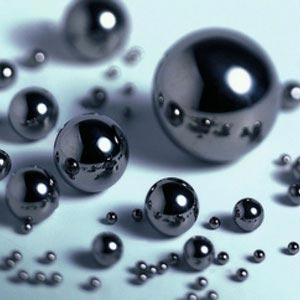
Precision Balls — Materials and Applications
Nibora Ltd. supplies precision balls in a comprehensive range of materials, diameters and precision grades. Precision balls are critical components in ball bearings, valves, pumps, measuring instruments, flow meters, and conveyor systems. Diameters range from 0.025 mm to 250 mm; precision grades from ISO G3 (ultra-precision) to G1000 (general industrial). All precision balls comply with ISO 3290, AFBMA and DIN 5401 standards.
Material selection for precision balls depends on the operating environment. Chrome steel AISI 52100 (through-hardened HRC 62–66) is the standard choice for ball bearings. Stainless steel AISI 440-C offers hardness plus corrosion resistance; AISI 316 with molybdenum is ideal for chemical and food-grade environments. Silicon nitride (Si₃N₄) ceramic balls operate up to 1400°C and are electrically insulating. PTFE and PP plastic balls withstand aggressive chemicals without lubrication. Contact Nibora Ltd. for pricing and availability.
Materials for Precision Balls — Overview
| Material | Standard/Grade | Ø Diameter (mm) | Hardness | Max Temp. | Typical Application |
|---|---|---|---|---|---|
| Хромова стомана | AISI 52100 / 100C6 | 0.025–250 | HRC 62–66 | 468°C | Сачмени лагери, общопромишлено |
| Въглеродна стомана (нисковъглеродна) | AISI 1010–1020 | 0.4–50 | HRC 60–64 | – | Мебелни колела, брави, играчки |
| Въглеродна стомана (висок С) | AISI 1045–1085 | 0.4–50 | HRC 60–62 | – | Велосипеди, ролкови транспортьори |
| Неръждаема мартензитна | AISI 420-B / 420-C | 0.40–150 | HRC 45–57 | – | Вода, пара, масло, клапани |
| Неръждаема мартензитна | AISI 440-C | 0.40–150 | HRC 58–65 | – | Прецизни лагери, нефтопреработка |
| Неръждаема аустенитна | AISI 304 / 304L | 0.40–150 | 135–200 HV | – | Аерозоли, медицина, агрикултура |
| Неръждаема аустенитна | AISI 316 / 316L | 0.40–150 | 135–200 HV | – | Химия, хранителна промишленост |
| Месинг | CuZn | по запитване | HB 180–200 | – | Помпи, клапани, горива |
| Волфрамов карбид | WC (K20) | 0.3–100 | HRa 90.5–91.5 | – | Дебитомери, компаратори, монетосечене |
| Monel (никелова сплав) | Monel 400 / K500 | 1.5–150 | 110–315 BHN | – | Морска среда, сярна киселина |
| Hastelloy | B2 / C276 / D | 3–150 | HRB 90–95 | – | Силно окисляващи киселини |
| Силициев нитрид | Si₃N₄ (95%) | по запитване | 24 000 HV | 1100–1400°C | Аерокосмос, метални инструменти |
| Алуминиев оксид | Al₂O₃ (99.8%) | по запитване | 16 500 HV | 1800°C | Клапани, помпи, лагери |
| Циркониев оксид | ZrO₂ (97%) | по запитване | 20 000 HV | 1000°C | Прецизни изделия |
| Стъкло (содово-варово) | Soda-Lime | 1–50 | 465 KHN | 110°C | Дебитомери, измерване |
| Стъкло (боросиликатно) | Borosilicate / Pyrex | 1–50 | 418 KHN | 490°C | Дозиращи помпи, киселини |
| Найлон (PA) | Polyamide | 1.5–150 | – | 163°C | Мебели, ролки, клапани |
| Делрин (POM) | Acetal Resin | 1.5–150 | – | 105°C | Фурнитура, клапани, електроника |
| Тефлон (PTFE) | PTFE | 1.5–150 | – | 287°C | Агресивни киселини, криогенни теч. |
| Силикон (VMQ) | Silicone | по запитване | – | 200°C | Храни, фармация, мед. оборудване |
| NBR каучук | Nitrile | по запитване | Shore 70 | – | Хидравлика, масла, солени разтвори |
| Viton (FKM) | Fluoro-Elastomer | по запитване | – | 220°C | Корозивни флуиди, пара, киселини |
Precision Grades — ISO 3290
| ISO Grade | Ø Variation (μm) | Sphericity (μm) | Surface Ra (μm) | Typical Application |
|---|---|---|---|---|
| G 3 | 0.08 | 0.08 | 0.010 | Ultra-precision instruments, aerospace |
| G 5 | 0.13 | 0.13 | 0.014 | Precision bearings class 2 |
| G 10 | 0.25 | 0.25 | 0.020 | Precision bearings class 3 |
| G 16 | 0.40 | 0.40 | 0.025 | Precision bearings class 4 |
| G 20 | 0.50 | 0.50 | 0.032 | Standard precision bearings |
| G 40 | 1.00 | 1.00 | 0.060 | General industrial bearings |
| G 100 | 2.50 | 2.50 | 0.100 | General low-precision applications |
| G 200 | 5.00 | 5.00 | 0.150 | Construction, toys |
| G 500 | 12.70 | – | – | Grinding and polishing media |
| G 1000 | 25.40 | – | – | Grinding media, decorative |
Resistance and selection
Chemical Resistance — Overview
| Material | Water | Weak Acids | Strong Acids | Alkalis | Oils | Food Contact |
|---|---|---|---|---|---|---|
| AISI 52100 (хром) | ✗ | ✗ | ✗ | – | ✓ | ✗ |
| AISI 440-C | ✓ | ✓ | ✓ | ✓ | ✓ | – |
| AISI 304 | ✓ | ✓ | ✓ | ✓ | ✓ | ✓ |
| AISI 316 | ✓ | ✓ | ✓ | ✓ | ✓ | ✓ (Mo защита) |
| Волфрамов карбид | ✓ | ✓ | ✗ (окисляващи) | – | ✓ | – |
| PTFE (Тефлон) | ✓ | ✓ | ✓ | ✓ | ✓ | ✓ |
| PP (полипропилен) | ✓ | ✓ | ✓ | ✓ | ✓ | ✓ |
| Si₃N₄ (керамика) | ✓ | ✓ | ✓ (повечето) | – | ✓ | ✓ |
Selecting Precision Balls by Application
| Application | Recommended Material | Reason |
|---|---|---|
| Standard ball bearings | AISI 52100 (chrome steel) | High hardness HRC 62-66, excellent wear resistance |
| Corrosive environment (water, steam) | AISI 440-C or 420-C | High hardness + corrosion resistance |
| Food industry | AISI 316 or PP/PTFE | FDA compatible, withstands sterilisation |
| Chemical industry (strong acids) | PTFE or Hastelloy C276 | Maximum chemical resistance |
| Extreme temperatures (>500°C) | Si₃N₄ (ceramic) | Operates to 1100–1400°C, lubrication-free |
| Electrical insulation | Si₃N₄ or ZrO₂ | Non-conductive, non-magnetic |
| Marine environment (salt water) | AISI 316 or Monel 400 | Mo content in 316 provides protection |
| Petrochemical (explosive atmosphere) | AISI 440-C or Monel K500 | High hardness + resistance |
| Light mechanisms, lubrication-free | PTFE or PA (Nylon) | Self-lubricating, lightweight, non-magnetic |
| Grinding and polishing | AISI 52100 G1000 or 420-C | High hardness, G1000 grade sufficient |
Specifications
Download PDF ↓Frequently Asked Questions
What is the difference between AISI 52100 and AISI 440-C precision balls?
AISI 52100 (chrome steel) is through-hardened to HRC 62–66 — the highest hardness for maximum load and wear resistance. Not corrosion resistant; will rust in humid environments. AISI 440-C is a martensitic stainless steel, HRC 58–65, resistant to water, steam, oil and gasoline. Choose 440-C when both hardness and corrosion resistance are needed.
Which precision balls are suitable for food industry applications?
For food industry: AISI 316/316L (non-magnetic, molybdenum protection, withstands sterilisation), polypropylene PP (FDA compatible, floats on water, highest chemical resistance of thermoplastics), or PTFE (resistant to virtually all chemicals, self-lubricating). AISI 304 is acceptable for lighter conditions. Avoid AISI 52100 — it rusts on contact with water.
What do ISO G3, G10, G40 and G100 precision grades mean?
ISO 3290 grades describe deviation from a perfect sphere in micrometres (μm). G3: ≤0.08 μm — ultra-precision instruments. G10: ≤0.25 μm — precision bearings. G40: ≤1 μm — standard industrial bearings. G100: ≤2.5 μm — general industrial. G1000: ≤25.4 μm — grinding media. Lower grade number = higher precision = higher price.
When should I choose ceramic balls instead of steel?
Choose ceramic precision balls (Si₃N₄, Al₂O₃, ZrO₂) when: temperature exceeds 500°C (ceramic operates to 1400°C); electrical insulation is required; non-magnetic components are specified; the environment is too corrosive for all metals; or lubrication-free operation is needed. Ceramic balls are ~60% lighter than steel and have hardness 16,000–24,000 HV.
What diameter range of precision balls do you supply?
Nibora Ltd. supplies precision balls from Ø 0.025 mm to Ø 250 mm. Chrome steel AISI 52100: 0.025–250 mm. Stainless steel: 0.40–150 mm. Ceramic: on request. Plastic: 1.5–150 mm. Rubber: 3/32" to 1" (imperial) and 1.25–195 mm (metric). Contact us for non-standard sizes.
What is the difference between AISI 304 and AISI 316 precision balls?
AISI 304 is the standard austenitic stainless — non-magnetic, good corrosion resistance, suitable for food industry. AISI 316 adds molybdenum (2–3%), significantly improving resistance to chlorides, sulphuric acid, and sea water. 316 is mandatory for aggressive chemical environments and marine applications.
How is the price of precision balls determined?
Price depends on: material (chrome steel < stainless < ceramic), diameter (larger = higher), precision grade (G3 is significantly more expensive than G100), and quantity (bulk is more economical). Contact Nibora Ltd. for current pricing for your required specifications.